COMMONWEALTH PARTY
OF AMERICA

Representation Adjusted for Taxation
|
While particular Democrat supporters basically insinuate their desires of concentration camps for the white male demographic and for their other declared undesirables plus expressing more affinity to socialism / communism (anti-capitalist fascism), we herein instead take issue against a convoluted and oppressive tax system that saps all people of prosperity and freedom hoping to compensate against the inflation and homelessness that's disrupted our lives over the last few years..... Notice that property taxes have been limited or eliminated in certain locales. Property taxes have been rightly disparaged as immoral for turning merited ownership into forever renting one's own property. In a similar vein, income tax robs citizen sovereignty over the economy and personal finances by giving politicians first dibs on people's wages thus directing unrealized capital towards the state's own favored socio-economic interests while depriving the populace of consumption, investment and ability to pay off debts. Income tax favors government largesse at your expense where the tax assessed is less balanced with regard to consumer activity, population growth, economic growth and necessity. Governments force you to file cumbersome paperwork under deadline that's nearly impossible to decipher in many cases. Whole industries now exist where one has to pay tax experts to file on their behalf or to find applicable loopholes. Those of the political opposition may feel the need to overpay in order to buffer against being singled-out by the system. Very doubtful that this is a tax system the founders had in mind where those rich and powerful afford to 'lawyer up' getting breaks personally or for their industry while mom-and-pop operations and the middle class may end up paying more than ideal rates. Yet who can blame the major payers shelling out to lobbyists or attorneys especially when the top 50% income earners pay about 97% of the federal income tax burden with the top 10% paying around 71%. Not only does the convoluted income tax code manipulate the citizenry's financial decisions, you have to account for your income and investments to the government annually while the politicians in power get to practice accounting malfeasance without conforming to a real budget after having bankrupted various local, state and national coffers. Some pols take to the airwaves promising to deliver services to their constituents if taxes are further raised especially on the rich who are alleged to not pay their fair share. Now what problems ever get solved? Not health care, education, housing, welfare, retirement and in some places immigration, emergency services and infrastructure are rife with boondoggles or dearth. They use the ambiguity of the tax code as a weapon against their political opposition including accusing them of unfair tax breaks or even evasion despite the legality of loopholes. Some have even had their tax returns leaked. Despite the obvious, many examples of bureacratic corruption are dismissed as political theater in a similar vein to voter ID being absurdly vilified as racist. All this begs: How well has the political class managed the national revenue?.......... 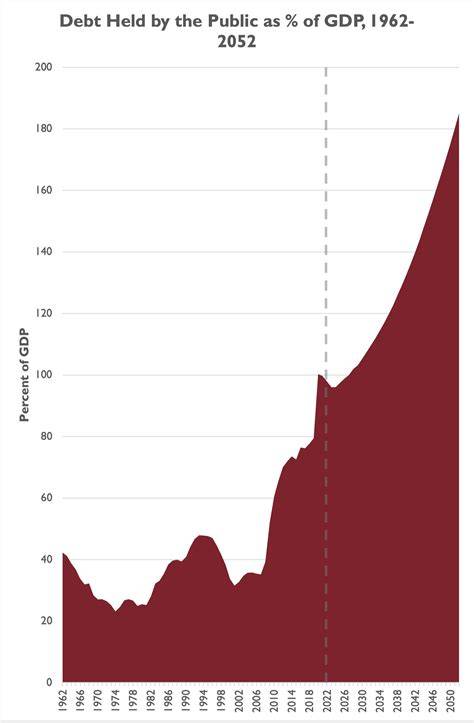
Source: National Taxpayer Union https://www.ntu.org/Library/imglib/2022/10/31T-9.png As you can see the pols have struck suck over the years with our return on investment being an ever-growing debt and with nothing actually solved. Why give the failed politicians any more money? No wonder the progressives vilify profits since profits denote success as opposed to the failure of bankrupting government pork and social programs. Defund the two-party politicians who got us into this mess and who will never fix it! re-scroll chartCitizens should not have to spend so much time, energy and capital in order to comply with taxation especially with such lack of results. A two-stage solution to consider is applying a flat tax with a decent standard deduction at first and then upon some full calendar year when everyone is ready the FairTax can take effect which is a national consumption sales tax replacing other federal taxes. It's not regressive as it has a monthly prebate that operates like the standard deduction for income tax. Remember that shelf prices will drop due to the removal of the drag of the income tax making ample room for the proposed consumption sales tax rate that in effect results in you paying about the same total for goods and services after sales tax is applied yet no federal withholding on your paycheck and no annual filing. Current local and state sales taxes get assessed to those lower shelf prices with option for them to incorporate more fully into the FairTax model yielding similar results. Now until income tax is removed at whatever national, state or even local level constituency, we should make all the filing information the government imposes on us a tool to effect better voter representation. You probably know the phrase: 'No taxation without representation'. We thus consider a corollary: 'Representation adjusted for taxation'. We look to the corporate shareholder world and notice that only shareholders have a say in the elections for the board of directors of a corporation. Thus corporations are modelled democratic with regards to their governing/voting structure. We also see that those with more shares can garner more votes. It is less fair otherwise. Now since corporate shareholding is a voluntary association whereas being a subject citizen is to be mandated unto governance, we will take that into account for the following proposed adjustment to civil representation:
The first counting accounts for the eligible voter being under mandate as a subject citizen and thus gives all votes equal weight regardless of one's taxation. The next two counts weigh or index votes by taxes paid. One count is associated to the amount paid and the other associated to the proportion one's taxation takes of their income. Altogether these metrics can lessen or increase voting power with respect to taxes paid and not just according to raw amounts that may favor the wealthy but also with regard to proportion of one's income while retaining a metric having everyone equal. The tax amounts calculated will be net values after considering for any welfare, subsidies, credits, deductions, etc. Along with the distributions of people in each class, all the dimensions provide a check against plutocracy and against perverse incentives for dependency. The associated weights or indexes applied should be for the completed tax cycle(s) interim since the last election regarding a particular constituency. How about the representation that could be bestowed upon domestic(ated) corporations paying corporate income tax? Progressives like to say corporations are not people and thus should be voteless entities ripe for revenue raiding but they are taxed like people. Are not corporations made up of people like employees and shareholders? Yes, their limited liability should regard the more unforeseen circumstances and not outright transgressions or negligence. As well, they should not be used as defacto government agencies nor given all powers and immunities thereof. Anyway, if corporations as a whole aren't to be regarded as people i.e. citizens in the domestic(ated) cases then they shouldn't be taxed like people and likewise denied adequate representation. How come the deficit-spending politicians get to have no accountability regarding the corporate capital they confiscate where such costs to the companies can eventually be passed on to the consumer? That money could be better retained by those companies large and small in order to reinvest in product development, facilities and equipment, shareholder and employee compensation or perks not to mention facilitating lower shelf prices. All that would be more beneficial than more graft, inefficiency and corruption for the politicians' pork projects and bureaucratic failures. There may be need to regulate or monitor corporations but yielding their capital to fiscally irresponsible politicians should not be considered a viable solution. So corporate income tax like personal income tax with its detriments and inefficiencies should be eliminated but until it is removed the citizen employees and shareholders should have their votes similarly weighed or indexed. Note again that not just large companies pay corporate income tax but so do the medium and smaller categorized corporations as well. There should also be desire to include such modified representation for other taxes like payroll taxes whether for corporations or individuals in a feasible, easy and noninvasive form. More power to such a proposal. Remember that corporate and individual tax amounts calculated are to include reductions for any welfare, subsidies, credits, deductions, etc. received so that the indexing components take range about the net taxes for one's situation. So what could the possible arguments ever be against invoking such a representation according to taxation? The progressives are always lamenting that the rich don't pay their fair share and if that is the case then these enhanced voter representations should more accurately proportionate their suffrage in such regard. Now if the top half of income earners actually are paying 97% of the income tax burden then that as well will be portrayed in the representation. If the middle class is getting the brunt of the overall tax burden then their personal proportions will take effect in the indexed voter representations as well. These voter indexes should yield more power to those footing the bill which is as it should be in the contribution pool of any endeavor. Should the progressives or uniparty naysayers resist these representations will there be realization that the income-taxing and payroll-taxing governments are being less fair or equitable than corporations? How about the more mediocre Republican establishment who may bemoan the convoluted income tax code and its toll on finances in media sound clips? Will they get on board for the afore-described voter indexing? Innovation and significantly altering the status quo is not their foray in practice. Providing more representational power to the more burdened citizen taxpayers in order to substantially adjust, reduce or eliminate the current onerous tax system is ideal. Why should any of these factions have any hesitation against that? With all the filing information derived from us it should be possible to assign to the populace such voter indexes a part of which applies from other such taxed entities in order to make all the hassle of the tax code not just work on behalf of the manipulative politicians, lobbyists and bureaucratic interests but to now more empower the people according to who foots the bill. Before the 16th Amendment, any national direct tax like the income tax would be levied to the populace of a state according to that state's apportionment of Representatives in Congress. Previously having the lion's share of such a direct tax levied upon those in states with greater House representation would act as a reactive barrier against such a tax getting too high. Currently in lieu of repealing the 16th Amendment, we can individually index the votes greater of those whose income tax and other measurable and reported taxes are greater in burden. When implemented, the tax-determined voter indices can be issued from the central taxing authority pertinent to the constituency of a particular elective race where they are transferred to one's ballot at the polls. In real world practice each race assigns the voter one personal summary multiplier that encapsulates the indexes assigned to their vote via the three counts and resultant of the averaging variant selected in the explanation as imagined above. When that ballot is finally cast the voter will see their personal summary multiplier applied to their vote when tallied at the ballot box counter. Color-coded ballots may be an option to indicate value or tier of their personal summary multiplier to facilitate faster counts, recounts or accuracy. Ideally voters should also be able to confirm their multiplier applied to their vote later in the counting process anonymously and privately through the ability to uniquely mark the ballot before casting or perhaps through some secure receipt system. So if they can impose a heavy, graduated income tax on the populace as the Communist Manifesto requires and even a regressive payroll tax then we should compensate representation through such taxation in some manner that better indicates such taxes toll on the various brackets and individuals. And while we're at it, there should be an accounting by the politicians who in some cases come into office enriching themselves via insider trading or perhaps kickbacks and then leave office gotten rich while their constituency's debt has been driven higher leaving you to pay it off. There should be consideration of putting at least some substantial part a public officeholder's finances into a trust or conservatorship where during or after leaving office if they partook in increasing the debt then their own assets should be used to help pay it off or be penalized such that an officeholder has a fiduciary interest during their time in stewardship of the public coffers. Now isn't it ironic that you get exposed to more constitutionally inspired, innovative true solutions to our problems like term limits, Supreme Court reform, multi-party voting, housing reform, gerrymandering prevention, the rescinding of totally dysfunctional presidencies and the handling of long congressional absences on a site that entertains secession than from the established, status quo politicians and the legacy media's skewed reporting? Concerning the FairTax:
*anchor for the sources link*
• SOURCES •
*anchor for 'Democrat Agenda Against White Males'
Re-Scroll Democrat Agenda Against White Males'Sen. John Fetterman (D-Pa.) on a new podcast is accusing his own party of being “toxic,” while suggesting it may be unable to win over white male voters.' 'In an appearance on the “Somebody’s Gotta Win” podcast, the senator said Democrats have talked down to voters, and they are seeing that boomerang on them.' “I think [Democrats’] primary currency was shaming and scolding and talking down to people and telling them, ‘Hey, I know better than you,’ or you’re dopes, or you’re a bro, or you’re ignorant or, ‘how can you be this dumb? I can’t imagine it.’ And then, by the way, they’re fascists. How can you vote for that?” Fetterman told host Tara Palmeri.' ~ Cheyanne M. Daniels | 02/07/25 11:37 AM ET https://thehill.com/policy/5132819-sen-john-fetterman-criticizes-democrats/'Democratic pundits are calling on their party to court working-class and non-coastal whites in the wake of this month’s electoral rout. But the Democratic Party is now dominated by identity politics, which defines whites, particularly heterosexual males, as oppressors of every other population in the United States. Why should the targets of such thinking embrace an ideology that scorns them?' 'Black Lives Matter rhetoric consists of slogans like: “CPD [Chicago Police Department] KKK, how many children did you kill today?” “F–k the police,” and “Racist, killer cops.” Officers have been assassinated by Black Lives Matter-inspired killers who set out to kill whites in general and white police officers in particular.' 'These claims of “structural racism and institutional oppression,” in the words of Brown University’s allegedly threatened black students, overlook the fact that every selective college in the country employs massive racial preferences in admissions favoring less academically qualified black and Hispanic students over more academically qualified white and Asian ones.' 'To combat alleged “white supremacy,” Democratic administrations have built permanent bureaucracies dedicated to the proposition that white males discriminate against everyone else.' 'The mandated remedy is a race-conscious policy crafted to favor non-white, non-male “identity.” ~ Heather Mac Donald | November 29th, 2016 https://manhattan.institute/article/sorry-its-the-democrats-who-racialized-u-s-politics'Democratic affiliation in the US has long had a lopsided gender makeup. Gallup polling shows that women have made up roughly 60 percent of the party since at least the late 1990s.' 'The Democratic Party’s website includes a section about the various constituencies it represents. In the “Who We Serve” section, the DNC’s website identifies sixteen different demographic groups that the party represents. It’s a comprehensive list, with one exception. Can you guess which demographic group representing roughly half of the voting population is not included?' 'In part, the Democratic Party’s single-gendered advocacy reflects longstanding commitments and priorities. It’s been roughly a decade since the Democratic Party introduced the slogan, “The War on Women,” in response to Republican policies restricting access to abortion. In a post-Roe world, this message certainly resonates with left-leaning women, but far less so with men.' 'Biden has a 33-point advantage over Trump among young women, but only a six-point advantage among young men. That’s astounding, but perhaps not surprising.' 'Gen Z men may find that they have more in common politically with Gen X and Baby Boomer men than with the women of their own generation. The political and cultural ramifications would be considerable.' ~ Daniel A. Cox | May 2, 2024 https://www.americansurveycenter.org/newsletter/have-democrats-given-up-on-men/'As we all know, Harris chose none of these white men. Instead, she selected a little-known governor from a solid blue state with a very progressive track record. But Tim Walz supposedly brought something else to the table that would carry the ticket to victory in November: masculinity. Tim Walz, football coach. Tim Walz, hunter. Tim Walz, soldier. Tim Walz, working-class cred. A sympathetic media gleefully burnished Walz’s gender credentials. He had “big dad energy.” He expressed a “casual, rugged, white-guy vibe.” He was a “man’s man.” 'According to The Wall Street Journal, men aged 18 to 29 supported Joe Biden in 2020 by 15 points. In 2024, they favored Donald Trump by 14 points, an astounding 29-point swing in a single election. CNN found a much smaller Trump lead among young men of two points, but even this is a significant transformation.' 'Already by mid-October, Team Harris was running low on joy. Democrats started playing hardball to close the gender gap with men. Barack Obama scolded black men in Pennsylvania for their lack of enthusiasm for the Harris-Walz campaign, explicitly accusing “the brothers” of misogyny.' 'Democrats were right to be worried. White men increased their vote for Trump at most by one percentage point. Black men added around 12 points, doubling their support from 2020. Hispanic men shifted to the right by anywhere from nine points to a shocking 17 points.' 'Democrats interpret the 2024 election’s return to 2016 levels among men as an undoubtable sign of misogyny. They would do better to instead see it as a reaction against those same Democrats’ attempts to scold, shame, denigrate, and manipulate men on the grounds of being men.' ~ Darel E. Paul | November 08, 2024 https://www.compactmag.com/article/democrats-disastrous-gender-politics/'Old white working-class males have become pariahs in many Democratic party circles. Increasingly, much of the rhetoric coming from Democratic candidates, who do not fall into the category with which I identify, openly vilify people such as myself simply because they are lumping us into a group that they have labeled oppressors. Much hard work and sacrifices have gone into fighting prejudice based in group identities, yet my own Democratic Party has condoned or permitted such prejudice when it comes to old working-class white guys.' 'This feeling of abandonment and vilification isn’t new to the past four years. A couple of years ago I contacted an acquaintance who is a member of the Legislature to ask her why the party would allow those in my group to be treated this way when we know that a hint of criticism or disparagement based on being a non-male or a person of color would (rightfully) be met with a storm of condemnation. Her response was “It’s our turn now." I asked her how she could expect me to continue to support a party that does not appear to respect or support me, as an individual. Her answer was that I still have more in common with Democratic ideals than those of the Republican Party. While that might be true, I’m not enthusiastic about supporting the Democratic Party by default.' 'Working class isn’t “white male” class. Until our party stops condoning ideation that all white working-class males are misogynistic, racially prejudiced throwbacks to the '40s and '50s, we won’t receive the support from this constituency necessary to win elections. ~ Kent A. Balduchi | Dec. 1, 2024, 8:21 a.m. CT https://www.desmoinesregister.com/story/opinion/columnists/iowa-view/2024/12/01/democrats-labeling-all-white-men-oppressors/76617809007/'As you’ve probably noticed, bashing straight white men, especially of the conservative kind, is very fashionable these days.' 'You seemingly can’t escape it — you switch on cable TV, or "The View", read The Washington Post or The New York Times, and see liberal pundits verbally attack white men for this or that.' 'Today’s Democratic Party is predicated on having and expressing open hostility toward white citizens. They are making the dangerous bet that most minorities and immigrants will jump on the white-male-bashing bandwagon.' ~ Saritha Prabhu | Oct. 29, 2018, 1:36 p.m. CT https://www.clarionledger.com/story/opinion/columnists/2018/10/29/white-men-now-democratic-partys-punching-bag/1809901002/'When I talked to Max, a senior preparing to graduate, he casually expressed that while his employment prospects were good, some places would not want him because he is a “white guy.” 'A recent essay published in Compact Magazine reminded me of my conversation with Max. Jacob Savage’s “The Lost Generation” argues that, over the last decade, professional opportunities for white millennial men have been disappearing due to discriminatory hiring practices. Savage argued that as organizations sought to implement policies aimed at boosting the hiring of women and minority candidates, it was white male applicants who lost out—especially those in the early stages of their careers. He cites an abundance of data to support his argument.' ~ Daniel A. Cox | January 8, 2026 https://www.americansurveycenter.org/newsletter/are-young-white-men-facing-discrimination/'That’s why she has spoken out about equal pay with the national team, racism and LGBTQ rights. But people such as “white athletes, particularly male athletes,” aren’t impacted and may not analyze the world around them, she said.' ~ Cassandra Negley | Mon, Nov 9, 2020 https://sports.yahoo.com/megan-rapinoe-activism-white-men-dont-speak-out-arent-impacted-by-racism-sexism-180748713.htmlYoung white men were pushed out of media and culture ~ GBNews | Jan 15, 2026 https://www.youtube.com/watch?v=dmwX-LR9lV4DEI resulted in fewer young white men in white collar jobs: Report | Batya! ~ NewsNation | Dec 20, 2025 https://www.youtube.com/watch?v=61PCINSGjsgIlhan Omar: Americans "Should Be More Fearful of White Men" ~ Caffeinated Thoughts | Jul 25, 2019 https://www.youtube.com/watch?v=W_1aYKVx-A8Charlie Kirk: Stop Blaming Straight White Men ~ Turning Point UK | Dec 28, 2024 https://www.youtube.com/watch?v=h1Q1geHRXxYThe View Host ATTACKS Straight WHITE MEN ~ Michael Knowles | Apr 27, 2022 https://www.youtube.com/watch?v=r10BeKU4uCsReport Makes SHOCKING Argument About White Men ~ The Young Turks | Dec 21, 2025 https://www.youtube.com/watch?v=0iYpVuHrKrsThe hatred of straight white men ~ Sydney Watson | May 29, 2025 https://www.youtube.com/watch?v=5QO7ZuPqNhEVictor Davis Hanson: The War on White Men Is Real—Here’s the Proof ~ The Daily Signal and Victor Davis Hanson | Dec 24, 2025 https://www.youtube.com/watch?v=KbreziZ8V6ATed Cruz To Top Biden DEI Chief: Your Policies Are ‘Nothing More Than Brazen Discrimination’ ~ Forbes Breaking News | Jul 26, 2022 https://www.youtube.com/watch?v=Gx_lHD6Cz9QDEMOCRATS AND THE WHITE SUPREMACY CONNECTION ~ Diamond and Silk | Aug 18, 2019 https://www.youtube.com/watch?v=pFyId5_8nZcTrump on Democrats calling him a white nationalist: ‘I don’t like it’ ~ Washington Post | Aug 9, 2019 https://www.youtube.com/watch?v=ljl6BCYyFLADem Candidates Push White Supremacy Narrative ~ TheDC Shorts | Aug 5, 2019 https://www.youtube.com/watch?v=CrxRhqUPUuYWhy Democrats Are So Focused On "White Supremacy" ~ The First | Sep 2, 2023 https://www.youtube.com/watch?v=uuRnwp3KXcwJasmine Crockett rants on CNN about "white tears, mediocre white boys", wants white men deported? ~ Articulate Thinker News Clips | Feb 5, 2025 https://www.youtube.com/watch?v=zb0a8HbwFFUDem lawmaker Jasmine Crockett rants about ‘the white man’ during a hearing on the Dismantle DEI Act ~ New York Post | Nov 21, 2024 https://www.youtube.com/watch?v=A8DX5D2my4kJasmine Crockett's Racism & The Kind of WHITE MEN Who Vote Democrat Despite Their Anti-White Racism ~ What About SCI | Feb 5, 2025 https://www.youtube.com/watch?v=0aE6J9f5jCAAOC, Squad Say We Need To Assume White Supremacists Infiltrate The Police ~ TheDC Shorts | Sep 30, 2020 https://www.youtube.com/watch?v=KnzSvvOmxFAAOC DECLARES WAR On Young White Men ~ Actual Justice Warrior | Nov 21, 2025 https://www.youtube.com/watch?v=mz7hhS-z-SU&t=110s
*anchor for 'Abolishing Property Taxes' Abolishing Property Taxes'A growing movement in several US states is calling for the abolition of property taxes, arguing that homeowners should not have to “pay rent” to the government just to live in their own homes.' 'The proposal has gained traction among conservatives and libertarians who argue that property taxes unfairly penalize ownership, particularly for retirees and low-income individuals.' 'Some legislators, such as Pennsylvania Representative Frank Ryan, have suggested replacing property tax revenue with higher sales taxes or a state-wide income tax surcharge.' 'This shift, they argue, would be fairer and more predictable than property taxes, which fluctuate based on real estate assessments and market conditions.' 'Conservative lawmakers have pushed for a gradual phase-out of property taxes, replacing them with consumption-based taxes.' 'Some states, like Florida and Tennessee, have instead opted for property tax caps, limiting how much taxes can rise annually rather than eliminating them altogether.' 'Some states may experiment with gradual reductions or alternative funding mechanisms, but a complete abolition remains an uphill battle due to the heavy reliance of local governments on this tax stream.' https://taxnatives.com/blog/us-states-consider-abolishing-property-taxes/'There have been increasing calls from interest groups for state legislatures and calls from legislators themselves across the country to abolish property taxes.' 'A common criticism of property taxes is that they can be regressive, taking a larger share of income from lower-income people than from people with higher incomes.' 'In the past five years, home values in many states have risen faster than homeowners’ income, making it difficult for some to pay the taxes due.' 'While several states are offering major relief for homeowners, a core group — including Florida, Indiana and Texas — is debating measures that would effectively eliminate specific portions of the property tax.' ~ Roxanne Bland | March 12, 2026 https://www.kiplinger.com/taxes/these-states-might-end-property-taxesProposed property tax moratorium advances in NC Senate with change ~ CBS 17 | May 6, 2026 https://www.youtube.com/watch?v=ARvvrL0SA_k
*anchor for 'Tax System Burdens' Tax System Burdens'Federal taxes impose burdens that extend far beyond the amount taxpayers ultimately owe each April. Complying with the tax code requires substantial time spent understanding complex rules, gathering documentation, and completing forms, as well as out-of-pocket expenses for tax preparation services, software, and related compliance costs.' 'Furthermore, the IRS data show that compliance burdens rise sharply as income increases. For taxpayers earning under $25,000, the IRS estimates an average time burden of about 11 hours and $125 in out-of-pocket costs. By contrast, taxpayers with incomes between $150,000 and $175,000 face average out-of-pocket costs exceeding $400, while those earning $250,000 to $275,000 incur average compliance costs of more than $700 and spend nearly 15 hours on tax compliance.' ~ Demian Brady | February 02, 2026 https://www.ntu.org/foundation/detail/individual-income-tax-compliance-burdens-ease-for-the-new-filing-season'In 2023, millions of taxpayers once again experienced significant burden and frustration while awaiting refunds or other IRS actions necessary to comply with their tax obligations and resolve tax account issues. These delays not only have negative financial implications for taxpayers awaiting refunds but also for the government, as the IRS must pay interest on overpayments it does not timely refund.' 'Some taxpayers and tax professionals still struggle to access information from the IRS, including finding clear and timely guidance on which they can rely, determining the status of pending issues, understanding IRS correspondence and whether they must respond to it, and reaching an IRS employee with the knowledge to answer their questions and the authority to resolve their problems.' 'Each year, the IRS flags millions of returns for potential fraud. Before receiving their refunds, taxpayers who have filed legitimate returns deal with inadequate notices and difficulties authenticating their identity. Meanwhile, victims of tax related identity theft experience long delays to have their returns processed and receive their refunds.' https://www.taxpayeradvocate.irs.gov/wp-content/uploads/2024/01/ARC23_MSP_01_MSPGlance.pdf'Taxation becomes the favourite weapon of interventionism. Taxation laws no longer aim exclusively or predominantly at increasing State revenues; they are intended to serve other purposes besides fiscal requirements. Sometimes their relation to public finance vanishes completely and they fulfil an entirely different function. Some taxes seem to be inflicted as punishment for behaviour that is considered injurious; the tax on big stores is intended to make it more difficult for big stores to compete with small shops; the taxes on stock exchange transactions are designed to restrict speculation. The dues become so numerous and varied that in making business transactions a man must first of all consider what the effect on his taxation will be. Innumerable economic projects lie fallow because the load of taxation would make them unprofitable. Thus in many states the high duties on founding, maintaining, amalgamating, and liquidating joint stock companies seriously restrict the development of the system.' 'Nothing is more calculated to make a demagogue popular than a constantly reiterated demand for heavy taxes on the rich. Capital levies and high income taxes on the larger incomes are extraordinarily popular with the masses, who do not have to pay them. The assessors and collectors go about their business with positive enthusiasm; they are intent upon increasing the taxpayer’s liability by the subtleties of legal interpretation.' 'Marx has spoken unfavourably of efforts to alter the social order by measures of taxation. He emphatically insisted that taxation reform alone could not replace Socialism. His views on the effect of taxes within the capitalist order were also different from those of the ordinary run of socialists. He said on one occasion, that to assert that ‘the income tax does not affect the workers’ was ‘truly absurd’. ‘In our present social order, where entrepreneurs and workers stand opposed, the bourgeoisie generally compensates itself for higher taxation by reducing wages or raising prices’. But the communist manifesto had already demanded ‘a heavy progressive tax’ and the social democratic party’s demands in taxation have always been the most radical. In that field also, therefore, it is moving towards destructionism.' https://mises.org/online-book/socialism-economic-and-sociological-analysis/chapter-2-methods-destructionism/7-taxation'Average annual per-capita GDP for the 20 nations increased by about 1.38 percentage points, on top of the previous average 5% annual growth, over the 10 years following adoption of a flat tax, according to the study. There was no evidence of continuing gains after that first decade.' 'Reduced progressivity — narrower differences in rates at various income levels that came with flat rate systems — was responsible for the strong economic gains that followed the reforms, according to Wheaton’s models of household labor and investment decisions under varying progressivity and his accompanying empirical analysis. Essentially, reducing progressivity increased the upside of ambitious investments and made such investment more attractive.' 'The flat rates appear to have increased tax compliance in the former communist countries, especially among the wealthy, Wheaton says. Tax evasion in these countries was higher than in Western nations due to extremely large shadow economies —estimates by researchers put 40% to 50% of transactions as unreported for many of these countries — and extensive “creative accounting” among the wealthy. With flat rates, Wheaton explains, it’s harder to game the system through legal loopholes, and it may simply be cheaper to pay than hire teams of professionals to defend noncompliance or to cut the bill.' 'In the former communist countries, Wheaton sought to rule out other explanations for the accelerated GDP growth after flat tax implementations. The tests found no evidence of increased foreign investment, increased innovation, systematic budget deficits or structural changes within industry that would have contributed to GDP growth.' ~ Dee Gill | 12 April 2023 https://anderson-review.ucla.edu/a-simplified-tax-code-and-post-communist-growth/'The negative income tax is a way to provide people below a certain income level with money. In contrast to a standard income tax, where people pay money to the government, people with low incomes would receive money back from the government.' 'This structure is designed so that people who work will always make more than people who don’t, which would ideally incentivize people to work. While someone who makes a little money — but not enough to pay income tax — will receive less from a negative income tax than someone who doesn’t make any money, overall, the person earning more will have more. The goal with a negative income tax is that no one is destitute, and earning even a small salary is always preferable to earning nothing.' 'Friedman argued that a negative income tax improved on traditional welfare — he wanted to give poor people cash rather than an array of welfare benefits. People could then use the money as they saw fit. He contended this would simplify the system — since it would be administered centrally by the IRS, who would cut the checks, instead of many different organizations — and be more valuable to intended beneficiaries, thereby increasing our transfer system’s bang for its buck.' 'Today, many branches of the welfare system in the U.S. provide people living below a certain income level with in-kind benefits. These are goods or services people need, like food stamps or housing vouchers, where instead of money recipients can use on anything, they get vouchers that must be used for one thing only.' 'But perhaps one of the biggest flaws in the system is what happens when welfare recipients start to earn more money. “The irony of our welfare system is that poor people pay very high taxes — for each dollar of earnings they lose benefits,” Angrist said.' ~ Rebecca Linke | Feb 7, 2018 https://mitsloan.mit.edu/ideas-made-to-matter/negative-income-tax-explained'America has a progressive individual income tax: The higher your income, the higher your tax rate. Tax exemptions and credits, on the other hand, tend to provide more benefits to lower-income earners.' 'However, the top marginal tax rate doesn’t tell the whole story. For example, the Tax Reform Act of 1986 (TRA86) reduced the top marginal tax rate from 50 percent to 28 percent, which alleviated the tax burden disproportionately for the higher-income group. The tax cuts might be interpreted as a change that scaled back progressivity. However, the TRA86 raised the levels of the standard deductions and the personal exemptions and expanded the earned income tax credit (EITC), all of which reduced the tax burden of the lower income earners . As a result, 5.9 million working poor would either pay no taxes or receive rebates.' 'Studies have shown that Roth accounts are more valuable for risk-averse workers if the future tax rates are uncertain because the post-tax accounts help them lock in the current known tax rate. On the other hand, the existing tax rate schedules are progressive, which incentivize people to choose the pre-tax accounts like the traditional 401(k) plans. This is because most people expect their income to be lower in retirement than in working age, so it's cost-effective to contribute tax-free money while working and pay taxes when withdrawing.' 'All else being equal, countries with lower taxes appeal more to multinational companies (MNCs) and foreign direct investment. While many countries cut corporate tax rates after the 1980s, the U.S. corporate tax rates were largely above average. The tax rate gap incentivized MNCs to shift income and investment abroad.' ~ Jialu L. Streeter | October, 2022 https://siepr.stanford.edu/publications/policy-brief/how-do-tax-policies-affect-individuals-and-businessesAlbeit this entry is from the World Bank Group: 'How taxes are raised and spent can determine a government’s very legitimacy. Holding governments accountable encourages the effective administration of tax revenues and, more widely, good public financial management.' 'All governments need revenue, but the challenge is to carefully choose not only the level of tax rates but also the tax base. Governments also need to design a tax compliance system that will not discourage taxpayers from participating. Recent firm survey data for 147 economies show that companies consider tax rates to be among the top five constraints to their operations and tax administration to be among the top 11.' 'The amount of the tax cost for businesses matters for investment and growth. Where taxes are high, businesses are more inclined to opt out of the formal sector. A study shows that higher tax rates are associated with fewer formal businesses and lower private investment. A 10-percentage point increase in the effective corporate income tax rate is associated with a reduction in the ratio of investment to GDP of up to 2 percentage points and a decrease in the business entry rate of about 1 percentage point. A tax increase equivalent to 1% of GDP reduces output over the next three years by nearly 3%.' 'Efficient tax administration can help encourage businesses to become formally registered, thereby expanding the tax base and increasing tax revenues. Tax administration that is unfair and capricious is likely to bring the tax system into disrepute and reduce the government’s legitimacy. In many transition economies in the 1990s, the failure to improve tax administration when new tax systems were introduced resulted in the uneven imposition of taxes, widespread tax evasion and lower-than-expected tax revenue.' 'Compliance with tax laws is important to keep the system working for all and supporting the programs and services that improve lives. One way to encourage compliance is to keep the rules as clear and simple as possible. Overly complicated tax systems are associated with high tax evasion. High tax compliance costs are associated with larger informal sectors, more corruption and less investment. Economies with simple, well-designed tax systems are able to boost businesses activity and, ultimately, investment and employment. New research shows that an important determinant of firm entry is the ease of paying taxes, regardless of the corporate tax rate. A study of 118 economies over six years found that a 10% reduction in the tax administrative burden—as measured by the number of tax payments per year and the time required to pay taxes—led to a 3% increase in annual business entry rates ' https://subnational.doingbusiness.org/en/data/exploretopics/paying-taxes/why-matters'It comes as little surprise that IRS forms constitute the lion's share of the overall paperwork burdens across the federal government. Currently there are 10,589 different information collections from all the federal departments, agencies, and commissions. While the IRS’s various forms comprise a mere 4 percent of this total, they account for 62 percent of the 10.5-billion-hour paperwork burden imposed by the federal government. Trailing in second place by a significant margin is the Department of Health and Human Services, with a burden of 1.6 billion hours, while the third place Securities and Exchange Commission obligates taxpayers to spend 371 million hours complying with its forms.' 'Another issue related to getting through to a live assistor is that the agent who answers the phone might not be able to help a taxpayer. The IRS has classified over 130 areas of the tax code as “out of scope” for telephone assistance. The guidance means that IRS employees cannot answer questions about these specified areas of the tax laws. Similarly, IRS tax preparation assistance programs like Volunteer Income Tax Assistance and Tax Counseling for the Elderly also cannot provide assistance or can only provide limited assistance for certain topics.' 'Moreover, a live assistor may be hindered in offering assistance because of the 60 different legacy case management systems run by the IRS. The representative on the other end of the phone might not be able to access the caller’s specific information. After decades of multiple attempts and billions of dollars spent to modernize the IRS information technology, its core program, the Individual Master File (IMF), is still based on 1960s-era assembly computer programming.' https://www.ntu.org/foundation/tax-page/tax-complexity-how-long-and-how-much-do-income-taxes-cost'For a worker making $50,000 per year, the full 15.3% FICA tax (including both employer and employee contributions) amounts to $7,650, a substantial portion of their earnings. Meanwhile, a high-income earner making $1 million per year only pays the full 15.3% on the first $168,600, significantly reducing the overall tax rate they face on wages.' 'This structure disproportionately impacts lower- and middle-income workers, as they pay payroll taxes on 100% of their earnings, while those making well above the wage cap see a declining share of their income taxed for Social Security.' 'When evaluating the overall tax burden, it is essential to consider not just federal income taxes, but also payroll taxes, state and local taxes, and consumption taxes (sales taxes, excise taxes, etc.)' 'When politicians or analysts cite statistics about who pays federal income taxes, it is important to consider the full tax picture—while high earners bear the brunt of income taxes, lower-income individuals face a heavier burden from payroll, sales, and excise taxes that consume a significant portion of their earnings.'' ~ Jessica I. Marschall | 13 March 2025 https://marschalltax.com/2025/03/13/understanding-the-distribution-of-the-u-s-tax-burden-federal-income-taxes-vs-payroll-taxes/'Excise taxes are taxes imposed on certain goods, services, and activities. Taxpayers include importers, manufacturers, retailers, and consumers, and vary depending on the specific tax. Excise taxes may be imposed at the time of: Entry into the United States, or sale or use after importation Sale or use by the manufacturer Sale or use by the retailer Use by the consumer' 'Section 4501 imposes a 1% excise tax on the repurchase of corporate stock by certain publicly traded corporations or their specified affiliates effective for repurchases after Dec. 31, 2022. TD 10037 & TD 10002 provide definitions and special rules relating to the new excise tax. You can find additional details on how to file a return and pay the tax, including when stock repurchases may prompt liability for the excise tax, in the Form 7208, Excise Tax on Repurchase of Corporate Stock, instructions.' 'If you want to engage in or receive benefits from many activities subject to federal excise tax, you must be registered with us first.' https://www.irs.gov/businesses/small-businesses-self-employed/excise-tax 'Internal Revenue Service (IRS): The federal agency responsible for collecting individual income taxes. It is controversial on a number of grounds: it is thought to use harsh methods to collect taxes, and to have extraordinary power to look into citizens' private affairs to determine whether income was earned that ought to be taxed.' 'In pre-revolutionary America, citizens seldom paid taxes directly; mostly taxes were collected on imports (tariffs, also known as customs duties), with some excise taxes. According to British tradition, "customs" paid on imports belonged to the king (the central government) and did not require parliamentary approval. But when the British government imposed other taxes, including a "stamp tax" and a tax on tea, colonists, being loyal Englishmen at the time, strongly objected to not having a voice in Parliament. "No taxation without representation" became a rallying cry for the American Revolution, and also presaged a longstanding debate over paying taxes to the central government.' 'An effort to restore a federal income tax in 1894 was challenged on the grounds that the Constitution allowed the federal government to impose direct taxes only if they were levied in proportion to each state's population. The Supreme Court declared personal income taxes unconstitutional in 1895, leading to passage and ratification of the Sixteenth Amendment in 1916, specifically permitting personal federal income taxes.' 'Sales tax advocates argue that a percentage of each transaction should be collected by merchants to finance the federal government. This would eliminate the complicated collection system represented by the Internal Revenue Service (IRS). Sales-tax-only advocates say that provisions can be made to protect the poor, such as a rebate to those with poverty-level incomes. They also state that collections would be cheaper and easier (because it would be much harder to avoid taxes paid on every purchase), and that the rich would pay higher taxes based on their greater number of purchases.' ~ William Lee, Marlanda English | 2024 https://www.ebsco.com/research-starters/economics/sales-tax-vs-income-tax-overview'It's too complicated. Even a degree in rocket science won't save you from 67,500 pages of all but indecipherable tax code regulations. It confuses the IRS, the secretary of treasury and even the former chairman of the House Ways and Means Committee. It's an annual nightmare that has spawned a tax industry based on complexity created by our own government.' 'Small businesses often pay more in paperwork expenses than the taxes they pay. Can any law be just, much less efficient, that costs so much to obey?' 'Income is commonly double and triple taxed, married people pay higher rates than singles living together.' 'Income taxes are levied on work, savings, and investments. In essence, the government grows by taking money from what makes the economy grow. Such a system retards capital formation, job growth, and a higher savings rate and, as such, stymies economic growth or recovery.' 'It makes Congressmen powerful and lobbyists rich and creates a tax system with more loopholes than Swiss cheese. It's very lucrative for those in Washington and very bad for those without a lobbyist.' 'It undermines American companies. Foreign governments often forgo domestic taxes on products for sale overseas. American companies don't get that break ....It puts the "Made in America" label at a significant producer price disadvantage and drives jobs overseas.' 'Taxes are withheld from paychecks, hiding from plain sight the cost of federal spending and its relationship to our own earnings. For many Americans, federal spending mistakenly seems like "free money." 'Once upon a time it was no one's business how much money we made or how we spent it. Today it is the right and duty of the federal government to track every penny we earn, save, or spend.' 'Business taxes don't come out of CEO's personal accounts but are paid for by consumers when taxes are "embedded" in wholesale and retail prices.' 'We get what's left over in our paychecks after the federal government has taken its share. That means the fruits of our labors belong first to our government. That's backwards and not at all what the Founding Father's had in mind.' ~ Paul Bedard | April 12, 2010, at 2:47 p.m. https://www.usnews.com/news/blogs/washington-whispers/2010/04/12/10-problems-with-the-income-tax'Under a federal consumption tax, the poor would experience negative effective tax rates because of the universal rebate. They would pay no tax up to the poverty level.' 'The FairTax generally has a more positive impact on marginal tax rates than does the flat tax.' 'The flat tax and the consumption tax both remove the income tax bias against savings and investment. The flat tax accomplishes this result by expensing capital costs and exempting the return on savings. The consumption tax accomplishes this same result by only taxing final consumption sales. Each would result in higher levels of savings and investment, higher rates of capital formation, higher productivity and higher real incomes.' 'Since the Consumption Tax plan removes the payroll tax while the flat tax keeps the payroll tax (and repeals the earned income tax credit), the FairTax will make it easier for the working poor to climb out of the dependency trap. In contrast, the working poor will continue to pay the 15.3% payroll tax on their first dollar earned under the flat tax. Under the FairTax, payroll taxes are repealed and a rebate of the consumption tax on expenditures up to the poverty level is provided. Thus, the marginal tax rate the poor will face is zero, and therefore, lower under the consumption tax than under the flat tax.' 'The flat tax is biased against workers because only those earning wages pay the tax. Those that earn income from capital gains (such as those with personal wealth) can avoid paying their fair share of taxes. This makes it less palatable to the American public.' 'There are those who believe that hiding taxes from the American people is a good thing, because if the people actually understood the true level of the tax burden, they wouldn't stand for it. The consumption tax, however, works on the principle that taxes should be visible and fairly convey the true cost of government. The consumption tax will by law be shown on every retail purchase sales receipt, and this provision will be mandatory.' https://govinfo.library.unt.edu/taxreformpanel/comments/_files/FlatTaxFairTaxComparison.pdf'The FAIRtax Toolbox - Download Printed Materials' https://fairtax.org/the-fairtax-toolbox https://fairtax.org/the-fairtax-toolbox
*anchor for 'Taxpayers Targeted' Taxpayers Targeted'There are other more taxpayer-friendly methods to increase enforcement, especially given the history of heavy-handed treatment of taxpayers. Simplifying the tax code and making it easier for taxpayers to get their tax questions answered from the IRS could go a long way to improving compliance by making it easier for citizens to comply with a convoluted tax system. Several non-partisan tax experts, including National Taxpayer Advocate Erin Collins, have called on Congress to re-allocate some of the remaining funding reserved in the law for tax enforcement to other areas. This money would be better spent on improving taxpayer services and helping the IRS achieve other operations goals such as replacing its legacy Individual Master File.' https://www.ntu.org/foundation/tax-page/tax-complexity-how-long-and-how-much-do-income-taxes-cost'Now, in the third audit of how the tax-exempt application process went off the rails, the Treasury Department's inspector general overseeing the IRS has found the agency targeted not just conservatives but also scores of groups with words like "progressive" in their names.' 'In June 2013, Rep. Hal Rogers, R-Ky., told Fox News the IRS had an "enemies list out of the White House." At a Tea Party rally on Capitol Hill, Sen. Rand Paul said an out-of-control government was "persecuting people for their religious and their political beliefs." 'Then-President Obama quickly cleaned house in the upper echelons of the IRS, but congressional hearings ran more than three years before they spun off into secondary issues, which inevitably included missing emails. Lerner became a target for conservative attacks when she took the Fifth Amendment at a House investigative hearing.' ~ Peter Overby | October 5, 2017 8:10 PM ET https://www.npr.org/2017/10/05/555975207/as-irs-targeted-tea-party-groups-it-went-after-progressives-too'Unfortunately, campaign finance watchdog groups such as Public Citizen’s Congress Watch division allege that nonprofits across the political spectrum often abuse that exemption. They accuse organizations such as the conservative Crossroads GPS and the liberal Priorities USA of existing primarily to influence elections and funnel campaign money to political candidates tax-free in violation of campaign finance laws. While tax-exempt social welfare organizations are permitted to participate in political campaigns and lobby to influence elections and legislation in the interest of the common good, that is not supposed to be their primary purpose.' 'So while a nonprofit must claim that its primary purpose is “social welfare” in order to qualify for tax-exempt status, in practice there can be no limitations imposed on its political spending. As a result of this ruling, the IRS saw a dramatic increase in the number of applications for 501(c)(4) exemptions for alleged nonprofit social welfare organizations between 2010 and 2012, mostly from politically conservative groups.' 'During the 2010 to 2012 period, the IRS flagged about 300 of the 2,400 applications for audit. However, word quickly spread among conservative groups that IRS reviewers were using keywords such as “Tea Party,” “patriot,” and “9/12” to select applications for audit. Some applicant groups received requests for donor lists; others said their applications were delayed far longer than warranted, even given the increased number of applications. Some conservative groups further alleged that the IRS singled out individual Tea Party donors for personal and business audits and suspected that information about these individuals‘ identities came in part from donor lists submitted to the IRS as part of the nonprofit application audit process.' 'In 2013, the IRS acting director of the Exempt Organizations Unit, Lois Lerner, spoke at a meeting of the American Bar Association, where she explained that the agency consolidated the unusually large number of applications into a single office in Cincinnati for processing. She said some employees used the terms “Tea Party,” “patriot,” “9/12,” or other political-sounding terms to group the applications but claimed this was done out of convenience rather than political bias. However, she admitted that this type of “shortcut” was unacceptable regardless of the reason and was inappropriate.' 'Regarding audits of individual Tea Party donors, the IRS claimed that donor lists submitted by nonprofits during their application audit process were never shared between departments and were destroyed. However, evidence surfaced suggesting at least three of the lists survived and that about 10 percent of the donors on those lists were personally audited—notably higher than the usual 1 percent of American taxpayers who are audited overall each year.'' ~ Tracey M. DiLascio | 2015 https://www.ebsco.com/research-starters/politics-and-government/politics-and-irs-scandal-overview'The technology and modernization challenges raise questions on whether the IRS could even handle this enormous flood of data, but it also poses a risk that taxpayers private data will be stolen, as happened with the leak to ProPublica by an IRS contractor. The Treasury Inspector General for Tax Administration, following up on previous reports, has continuously warned that security risks persist in the IRS’s case management system. Among the issues raised are that activity logs need to be better monitored to see who is accessing and modifying data, and inactive accounts need to be deactivated on a stepped-up timetable to restrict unauthorized access.' https://www.ntu.org/foundation/tax-page/tax-complexity-how-long-and-how-much-do-income-taxes-cost'The announcement didn't identify which records Littlejohn stole or which media outlets received them, but court records and previously published stories about his case reveal that he stole tax returns for President Donald Trump, Jeff Bezos, Elon Musk and other billionaires and leaked them to the New York Times and ProPublica. Between them, the two outlets published dozens of stories in 2020 and 2021 based on the records, which showed, among other things, how little in federal taxes these and other super-rich Americans had paid on their massive earnings over the years, as well as the strategies they used to achieve this.' 'In June of 2020, he created a query to pull "the top 500 taxpayers by income by year for the past 15 years" from IRS databases. He used two virtual machines to receive the data (virtual machines are simulated versions of a computer rather than physical computers) then erased the virtual machines after he was done with them. Prosecutors don't say how many records the search produced or how many Littlejohn extracted.' 'The fact that the Justice Department, under the Biden administration, charged him with only one criminal count garnered a lot of criticism from Republican lawmakers at the time. They implored the court to "throw the book" at Littlejohn and give him the maximum sentence, which the court did. Shortly after his sentencing, in February 2024, Littlejohn notified the court of his intention to appeal the sentence as unfairly harsh.' 'After Littlejohn's sentencing in 2024, the IRS began to reveal the scope of the breach when it sent out notices to 70,000 individual and corporate taxpayers who the department said were impacted by it. That figure has since changed. Last February, the IRS informed the House Judiciary Committee that Littlejohn had stolen and leaked tax data for at least 405,427 taxpayers, not 70,000. The following month, the committee, angered over the "sweetheart plea deal" that the Justice Department under the Biden administration had given Littlejohn, sent a letter to Littlejohn's attorney calling him to testify before the committee about the breach and his sentence. Littlejohn's attorney declined, however, citing the 5th Amendment due to the fact that he's appealing the sentence.' "The Trump Organization has a distinct and vital interest in the outcome of this appeal. As one of the intended targets of Littlejohn's corrupt scheme, his actions severely impacted The Trump Organization," the Trump Organization wrote in its request to the court. "Littlejohn unlawfully disclosed highly sensitive and confidential tax records of President Trump, his family, and hundreds of Trump Organization-affiliated entities and employees to multiple mainstream media outlets. This breach represents an unprecedented violation of trust, and any reduction of Littlejohn's sentence would overlook the real and tangible harm suffered by his victims." ~ Kim Zetter | Jan 27, 2026 https://www.zetter-zeroday.com/booz-allen-tech-contractor-took-irs-job-specifically-to-leak-trumps-tax-records/'One of the impacted taxpayers, hedge fund manager Ken Griffin, recently filed a lawsuit against the IRS and the Treasury Department, claiming, among other things, that these agencies are liable for the Littlejohn data breach that resulted in the unlawful disclosure of Ken Griffin’s confidential tax return information.' 'Although the Littlejohn data breach occurred in 2020, the IRS only recently began issuing disclosure notice letters (Letters 6613-A) in April 2024, alerting victims of its data breach and recommending steps to redress the breach.' 'We recognize that this incident has created a difficult situation for many taxpayers, including individuals as well as business entities. We also recognize that it is incumbent on the IRS not only to protect confidential taxpayer information, but also to address matters to the fullest extent possible when any such information is unlawfully disclosed.' | May 16, 2024 https://www.hunton.com/insights/legal/was-your-confidential-information-leaked-from-the-irsPeople are up in arms over websites tracking your information in order to send you adverts but why is there less widespread concern towards a tax system keeping indepth tabs on personal finances with either the government constantly asking for your papers or the possibility of having that information hacked and/or even published? 'With the recent disclosure by The New York Times of three pages of Republican presidential nominee Donald Trump’s 1995 state tax returns, Americans have gotten a glimpse of the tricky knot of laws governing the disclosure of private taxpayer information and the First Amendment rights of the press.' 'Of course, tax attorneys, CPAs, enrolled agents, and accountants are also covered by Circular 230, which governs practice before the IRS. Those tax professionals could be subject to sanctions from their professional associations as well if sanctioned or disbarred by the IRS for unauthorized disclosure or other violations of Circular 230. The National Association of Enrolled Agents, the American Institute of CPAs, and other groups of tax professionals maintain ethical codes and standards of professional conduct that, if violated, could result in suspension or expulsion from the groups.' 'Although Trump has said he may sue the Times for publishing the state tax returns, commentators suggested he may not get far. ‘‘If he does, I don’t think he’s going to find a lot of sympathy at the Justice Department to prosecute.' 'The main tax code provision that could apply to media disclosure of tax information is section 7213(a)(3), which states that it is unlawful for unauthorized persons to ‘‘print or publish’’ private taxpayer information. However, McKenzie said it’s an open question whether section 7213(a)(3) could come into play if someone released, and a media outlet published, Trump’s federal tax returns.' ‘‘The funny thing about the First Amendment is that it is a very strong shield for the media, because right now there’s definitely a public interest in Mr. Trump’s tax returns that probably outweighs any privacy concerns he might have,’’ Bruno said. ‘‘And that’s really how the courts are going to look at it.’’ 'Eshoo told Tax Analysts October 7. ‘‘Tax returns are highly instructive and answer important questions about a candidate’s priorities, including whether that individual gave to charity, took advantage of tax loopholes, or kept money in offshore havens.’’ 'What Wyden’s bill does is add the FEC to the list of authorized individuals and agencies under section 6103 to which otherwise confidential taxpayer information may be disclosed. It does not address the First Amendment issues raised by the unauthorized publication of tax information.' ~ William Hoffman | October 17, 2016 https://www.rivkinradler.com/wp-content/uploads/2016/11/Bruno-Tax-Analysts-Trump-Return-Leak-Shines-Light-on-Tax-Disclosure-Laws-11-16.pdf
*anchor for 'Bureaucratic Corruption Dismissed' Bureaucratic Corruption Dismissed'One reason why Medicaid has high levels of fraud is that it is an open-ended "matching" program. The states administer the program and decide how much to spend, but the federal government pays more than half of the costs. That creates a disincentive for state officials to worry too much about fraud and abuse. Indeed, state governments themselves have a history of abusing Medicaid by creating schemes to improperly boost their receipt of federal matching dollars. The Washington Post rightly called these state schemes a "swindle," but noted the political resistance to doing anything about it. One solution to these problems is to turn Medicaid into a block grant and freeze the amount of aid to each state. That would immediately give states a big incentive to cut all types of waste, fraud, and abuse.' 'A further problem is that Congress has little political incentive to cut down on waste and abuse. That's because costs are benefits to politicians. If investigators find abuse by, say, a defense contractor in a member's congressional district, that member will usually be inclined to take the contractor's view of things. After all, if the contractor overbilled federal taxpayers, it just means that more money was spent in the member's district. Of course, members of Congress must look as if they are on the side of the taxpayer, and so they will hold occasional oversight hearings to investigate abuses. But sustained congressional efforts to really combat waste, fraud, and abuse in the federal budget are rare.' ~ Chris Edwards and Tad DeHaven | August 1, 2009 https://www.downsizinggovernment.org/fraud-and-abuse'The Minnesota House fraud prevention and oversight committee released its final report following a two-year investigation into the state’s fraud crisis, concluding this week that Gov. Tim Walz’s (D-MN) administration allowed fraud to persist by protecting Somali fraudsters from state regulators out of concerns for cultural sensitivity, even accusing rank-and-file investigators of racially profiling suspected scammers.' 'According to the committee’s 84-page report on “Waste, Fraud, and Abuse in Minnesota,” adopted Wednesday, when government employees flagged suspicious billing patterns to their supervisors, officials in the Walz administration ignored, demoted, and retaliated against the whistleblowers, at times accusing them of being “xenophobic” toward the subjects of these investigations.' ~ Mia Cathell | May 13, 2026 3:09pm ET | Updated May 13, 2026 3:54pm ET https://www.downsizinggovernment.org/fraud-and-abuse'As we’ve written previously, Democrats have a habit of defending massive systemic fraud by opposing and demagoguing commonsense reforms as harmful “cuts” to programs. One would think government expansionists would have a powerful political incentive to combat waste and fraud within the programs they cherish because such abuses undermine public confidence in said programs — and might (read: should) inspire widespread skepticism about further expansion. ' 'The only acceptable direction of spending is up, always, featuring the largest increases they can get away with. At best, they are indifferent to fraud, apparently having concluded that misused funds can be hidden in the bloat or written off as the cost of compassion, and that their ideological allies in the ‘news’ media will generally ignore or run interference on these matters.' ~ Guy Benson | March 12, 2026 11:44am ET https://www.washingtonexaminer.com/opinion/4489621/democrats-identify-wasteful-spending-they-oppose/'Unfortunately, the financial reporting and funding rules surrounding government pensions are not covered by the same strict protections afforded to the private sector by the 1974 ERISA law. It’s called the Employee Retirement Income Security Act, and its main goal was to protect employee retirement benefits.' 'In the past, employers, including large corporations, often took risks with employees’ retirement benefits and underfunded their plans. So Congress passed ERISA to protect employees’ retirement accounts, but it exempted state and local governments from the same strict funding and reporting rules. Truth in Accounting encourages elected officials to strengthen transparency and accountability by supporting reforms that would bring government pension plans under the same Executive Summary standards as private-sector plans. By applying ERISA-like principles to public pensions, elected leaders would be held accountable for fulfilling their contractual obligations to government employees, and taxpayers would gain a clearer understanding of the full cost of these long-term commitments.' https://www.truthinaccounting.org/library/doclib/Financial-State-of-the-States-2025.pdfDemocrats Dismiss Fraud As "Not Serious" ~ Rep. Eli Crane | Mar 4, 2026 https://www.youtube.com/watch?v=GsooDVP79fADemocrats Just Voted to KEEP Billions in Taxpayer Fraud Flowing – House Oversight Shock ~ Liberty Lens | Apr 29, 2026 https://www.youtube.com/watch?v=IEcima-66RMGOP Leaders Claim Democrats Block Anti-Fraud Measures Amid Nationwide Investigations ~ One America News Network | Jun 10, 2026 https://www.youtube.com/watch?v=WQFiCt7xbCg
*anchor for 'Corporate Structure' Corporate Structure'The modern system of corporate governance exists to ensure that companies represent the interests of their owners (shareholders). The board of directors is elected by the shareholders of the corporation. They are responsible for overseeing the work of the management team, including the chief executive officer (CEO) and other C-suite executives.' 'The role of the board is to monitor a corporation's management team, acting as an advocate for shareholders. In essence, the board of directors tries to make sure that shareholders' interests are well-served.' 'A company's board of directors is responsible for setting the long-term strategic direction of a company or organization. This can include appointing the executive team, setting goals, and replacing executives if they fail to meet expectations. In public companies, the board of directors is also responsible to the shareholders, and can be voted out in a shareholder election. Board members may represent major shareholders, or they may be executives from other companies whose experience can be an asset to the company's management.' ~ By The Investopedia Team | Updated April 07, 2025 https://www.investopedia.com/articles/basics/03/022803.asp'Where companies are publicly listed on stock exchanges, the “boss” is the board of directors. For privately owned companies, the boss is the owner (although, in many cases, the owner might appoint themselves as the CEO, or establish a board, or both)' 'When boards of directors are involved, they are bound by fiduciary duty to represent the company’s shareholders and must always make decisions in their best interest.' 'The board usually appoints or dismisses the CEO and other key executives, while the shareholders usually vote the board into or out of power.' ~ Dan Byrne https://www.thecorporategovernanceinstitute.com/insights/lexicon/what-is-corporate-structure'Shareholders elect the individuals who make up the board of directors. The board of directors is responsible for writing the organization's bylaws, scheduling annual meetings to discuss the direction of the business, approving projects and budget increases, making sure the CEO is performing their job as expected and creating committees that will further the purpose of the company.' 'Positions within the board of directors may include a chairperson, vice president, secretary, treasurer and other directors, including both inside and outside directors. Inside directors work at the company and are involved in the day-to-day operations while outside directors are usually responsible for more impartial decisions. How many board members an organization has depends on its needs.' 'Shareholders are owners of the company because they own a percentage based on how many shares of stock they own. Shareholders may be the founders of the organization or investors who contribute capital in exchange for part ownership. If a company trades publicly in the stock exchange, then any member of the public can purchase stock and own a part of the company.' 'While shareholders aren't liable in most situations, they can help make decisions on behalf of the business. The more shares a shareholder owns, the more power they have, which enables them to do things like choose who makes up the board of directors, decide what the bylaws or articles of incorporation should include, research merger and acquisition options and handle assets.' ~ Indeed Editorial Team | Updated December 11, 2025 https://www.indeed.com/career-advice/career-development/corporate-structures'When beginning a business, you must decide what form of business entity to establish. Your form of business determines which income tax return form you have to file. The most common forms of business are the sole proprietorship, partnership, corporation, and S corporation. A limited liability company (LLC) is a business structure allowed by state statute. Legal and tax considerations enter into selecting a business structure.' https://www.irs.gov/businesses/small-businesses-self-employed/business-structures'Businesses in the U.S. can be broadly divided into two groups: C-corporations and pass-throughs. The latter includes S-corporations, limited liability companies (LLCs) a, partnerships, and sole proprietorships. Although the term “corporation” is often associated with large companies like Microsoft and Walmart, C-corporations can be both large and small businesses. The distribution of assets and size of C-corporations are extremely skewed. Less than 1 percent of all C-corporations paid for more than 85 percent of all federal corporate income taxes in 2000' ~ Jialu L. Streeter | October, 2022 https://siepr.stanford.edu/publications/policy-brief/how-do-tax-policies-affect-individuals-and-businesses'In forming a corporation, prospective shareholders exchange money, property, or both, for the corporation's capital stock. A corporation generally takes the same deductions as a sole proprietorship to figure its taxable income. A corporation can also take special deductions. For federal income tax purposes, a C corporation is recognized as a separate taxpaying entity. A corporation conducts business, realizes net income or loss, pays taxes and distributes profits to shareholders.' 'The profit of a corporation is taxed to the corporation when earned, and then is taxed to the shareholders when distributed as dividends. This creates a double tax. The corporation does not get a tax deduction when it distributes dividends to shareholders. Shareholders cannot deduct any loss of the corporation.' 'C corporations that are required to file 10 or more returns in a calendar year (calculated by aggregating all returns of any type) are required to e-file their Forms 1120, effective for returns required to be filed on or after January 1, 2024.' https://www.irs.gov/businesses/small-businesses-self-employed/forming-a-corporation'S corporations are corporations that elect to pass corporate income, losses, deductions, and credits through to their shareholders for federal tax purposes. Shareholders of S corporations report the flow-through of income and losses on their personal tax returns and are assessed tax at their individual income tax rates. This allows S corporations to avoid double taxation on the corporate income. S corporations are responsible for tax on certain built-in gains and passive income at the entity level.' 'In order to become an S corporation, the corporation must submit Form 2553, Election by a Small Business Corporation signed by all the shareholders.' https://www.irs.gov/businesses/small-businesses-self-employed/s-corporations'A Limited Liability Company (LLC) is a business structure allowed by state statute.' 'Owners of an LLC are called members. Most states do not restrict ownership, so members may include individuals, corporations, other LLCs and foreign entities. There is no maximum number of members. Most states also permit “single-member” LLCs, those having only one owner.' 'Depending on elections made by the LLC and the number of members, the IRS will treat an LLC as either a corporation, partnership, or as part of the LLC’s owner’s tax return (a “disregarded entity”) ' 'An LLC that does not want to accept its default federal tax classification, or that wishes to change its classification, uses Form 8832, Entity Classification Election PDF, to elect how it will be classified for federal tax purposes.' https://www.irs.gov/businesses/small-businesses-self-employed/limited-liability-company-llc'Your business structure affects how much you pay in taxes, your ability to raise money, the paperwork you need to file, and your personal liability.' 'You'll need to choose a business structure before you register your business with the state. Most businesses will also need to get a tax ID number and file for the appropriate licenses and permits.' PARTNERSHIPS 'Partnerships are the simplest structure for two or more people to own a business together. There are two common kinds of partnerships: limited partnerships (LP) and limited liability partnerships (LLP).' 'Limited partnerships have only one general partner with unlimited liability, and all other partners have limited liability. The partners with limited liability also tend to have limited control over the company, which is documented in a partnership agreement. Profits are passed through to personal tax returns, and the general partner — the partner without limited liability — must also pay self-employment taxes.' 'Limited liability partnerships are similar to limited partnerships, but give limited liability to every owner. An LLP protects each partner from debts against the partnership, they won't be responsible for the actions of other partners.' LIMITED LIABILITY COMPANY (LLC) 'An LLC lets you take advantage of the benefits of both the corporation and partnership business structures.' 'Profits and losses can get passed through to your personal income without facing corporate taxes. However, members of an LLC are considered self-employed and must pay self-employment tax contributions towards Medicare and Social Security.' COPRORATIONS 'A corporation, sometimes called a C corp, is a legal entity that's separate from its owners. Corporations can make a profit, be taxed, and can be held legally liable.' 'Corporations offer the strongest protection to its owners from personal liability, but the cost to form a corporation is higher than other structures. Corporations also require more extensive record-keeping, operational processes, and reporting.' 'Unlike sole proprietors, partnerships, and LLCs, corporations pay income tax on their profits. In some cases, corporate profits are taxed twice — first, when the company makes a profit, and again when dividends are paid to shareholders on their personal tax returns.' 'An S corporation, sometimes called an S corp, is a special type of corporation that's designed to avoid the double taxation drawback of regular C corps. S corps allow profits, and some losses, to be passed through directly to owners' personal income without ever being subject to corporate tax rates.' 'Not all states tax S corps equally, but most recognize them the same way the federal government does and tax the shareholders accordingly. Some states tax S corps on profits above a specified limit and other states don't recognize the S corp election at all, simply treating the business as a C corp.' 'S corps must file with the IRS to get S corp status, a different process from registering with their state.' 'There are special limits on S corps. Check the IRS website for eligibility requirements. You'll still have to follow the strict filing and operational processes of a C corp.' 'A benefit corporation is a for-profit corporation recognized by a majority of U.S. states. Benefit corporations are different from C corps in purpose, accountability, and transparency, but aren't different in how they're taxed.' 'Benefit corporations are driven by both mission and profit. Shareholders hold the company accountable to produce some sort of public benefit in addition to a financial profit. Some states require benefit corporations to submit annual benefit reports that demonstrate their contribution to the public good.' 'Close corporations resemble B corps but have a less traditional corporate structure. These shed many formalities that typically govern corporations and apply to smaller companies.' 'State rules vary, but shares are usually barred from public trading. Close corporations can be run by a small group of shareholders without a board of directors.' 'Nonprofit corporations are organized to do charity, education, religious, literary, or scientific work. Because their work benefits the public, nonprofits can receive tax-exempt status, meaning they don't pay state or federal income taxes on any profits it makes.' 'Nonprofits are often called 501(c)(3) corporations — a reference to the section of the Internal Revenue Code that is most commonly used to grant tax-exempt status.' COOPERATIVE 'A cooperative is a business or organization owned by and operated for the benefit of those using its services. Profits and earnings generated by the cooperative are distributed among the members, also known as user-owners. Typically, an elected board of directors and officers run the cooperative while regular members have voting power to control the direction of the cooperative. Members can become part of the cooperative by purchasing shares, though the amount of shares they hold does not affect the weight of their vote.' | Last updated March 7, 2025 https://www.sba.gov/business-guide/launch-your-business/choose-business-structure'Originally Answered: Why are companies not democratically organised?' 'Surely it should be one man one vote, not one share one vote? In the case of multiple ownership, all the owners could decide by a subsidiary vote or choose to abstain by not doing so.' >>'No. It is unreasonable for a shareholder who owns 25% of the company to have no more say than someone who owns 0.001% of the company. This would be a charter for disruptors, who by buying one share each could outvote a few large investors who own the large majority of the company. Do you really want the company to be run by a few thousand activists who own a tiny fraction of the company, to the detriment of, say, pensions funds with many people’s retirement funds?' >>'If you get no more say by putting in more money, why should anybody put a big investment into a startup?' ~ Alec Cawley >>'Corporations are the most common type of democratically structured company because shares of stock can be given to anyone, including investors, customers, and employees. Many companies either grant stock to employees or give them a discount on purchasing company stock.' >>'Whereas, employee-owned companies, worker cooperatives, and member-owned cooperatives are fewer in number because it is harder or impossible to attract investors. And it is harder, but not impossible, to grow into a large company without investors.' >>'So a huge percentage of businesses are already democracies. But, as you can see, who gets to vote varies widely.' ~ Scott M. Stolz >>'Publically-traded companies somewhat are. They have annual meetings, but at these meetings, the rule is usually “one share, one vote” and not “one person, one vote” because it would hardly be fair to give the opinion of a perosn who owned a single share the same weight as a person who owned 10,000, or 100,000 shares.' ~ Robert Qualls https://www.quora.com/Why-are-companies-not-set-up-with-democratic-structures
*anchor for bottom of page* |
||||||||||||||||||||||||||||||||||||||||||||